School of Video Game Audio - Wwise Footstep Implementation

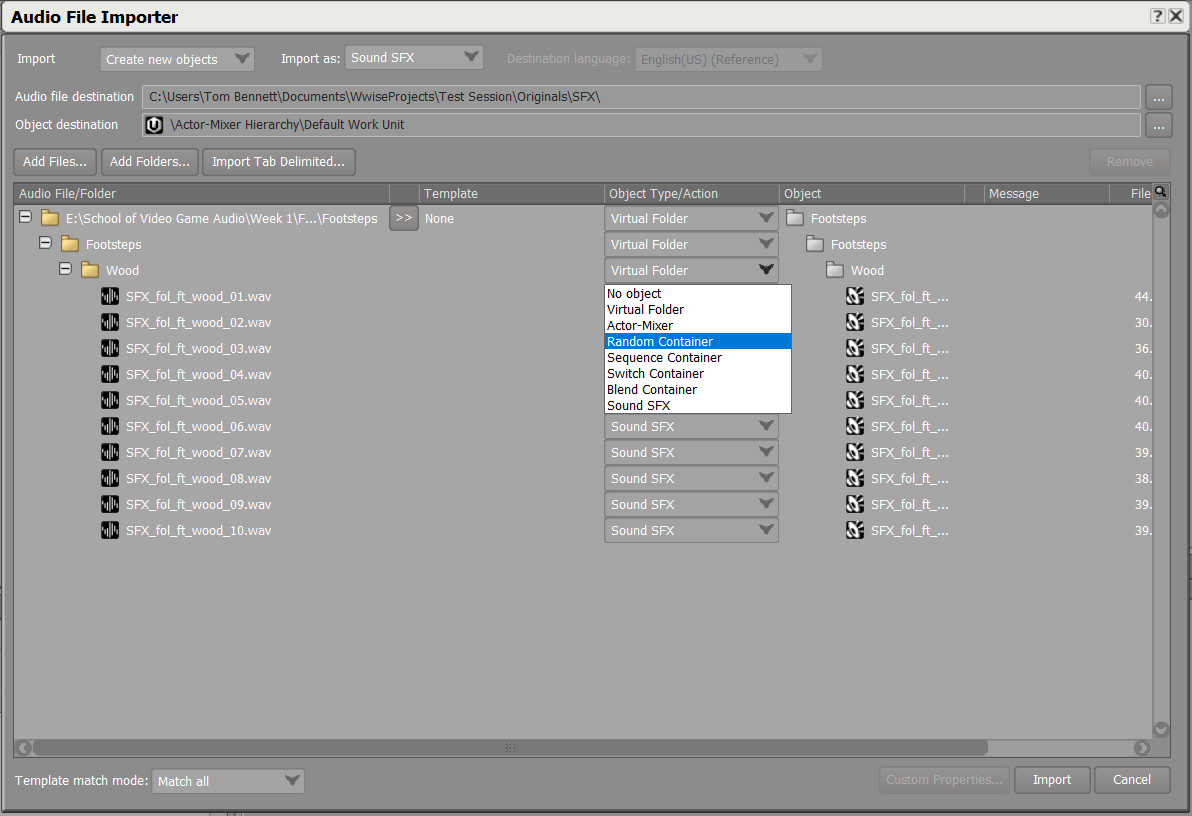
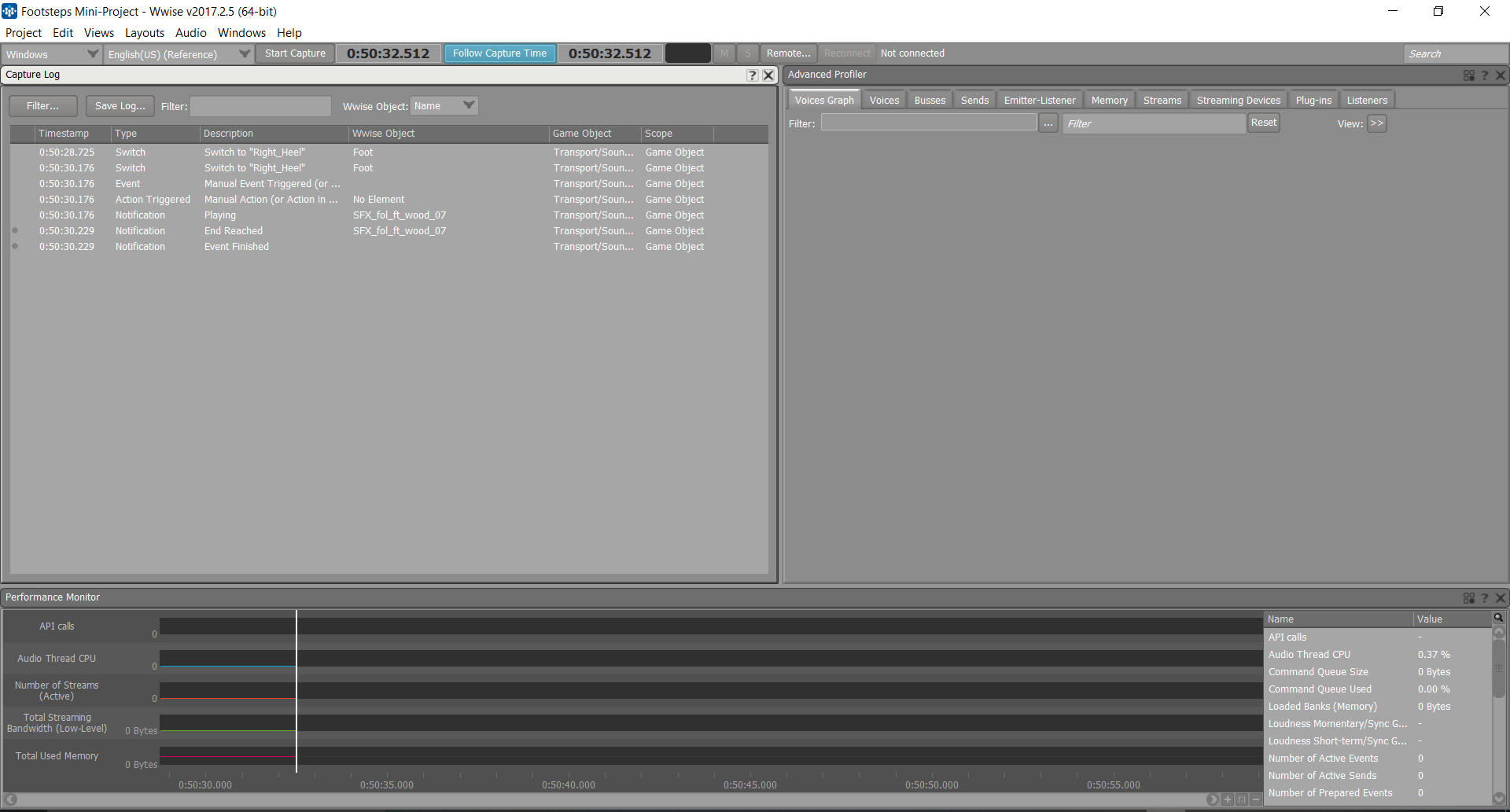
My first assignment on the School of Video Game Audio's Wwise course was to implement footstep sounds into a blank Wwise project in three different ways.

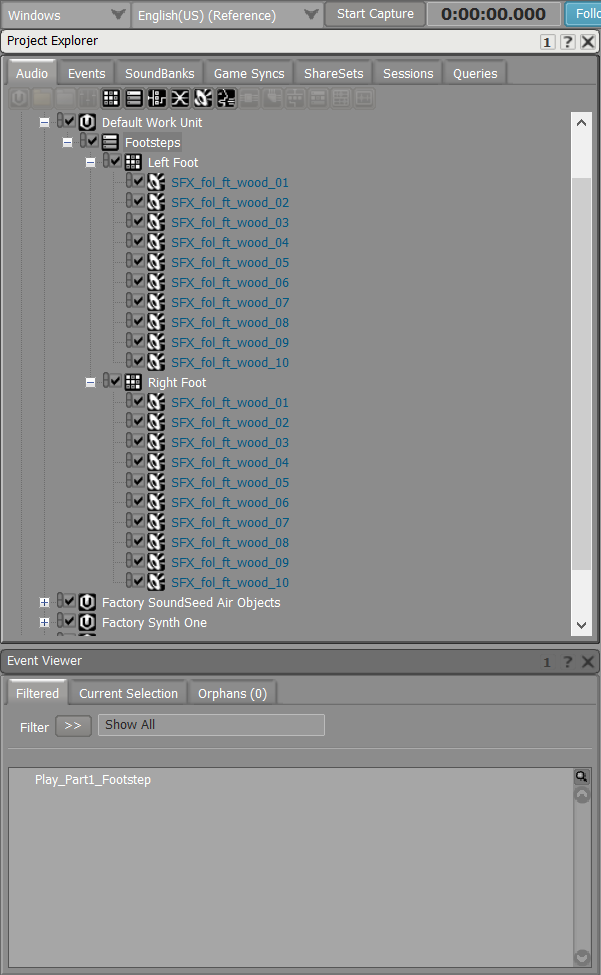
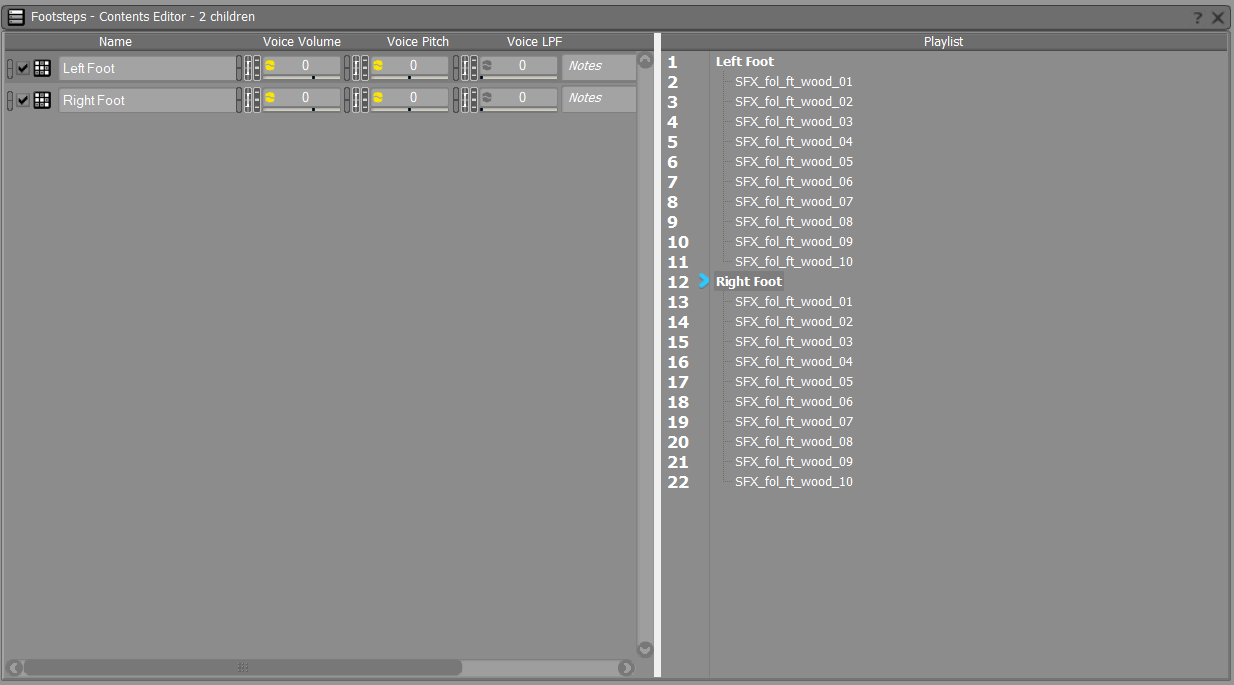
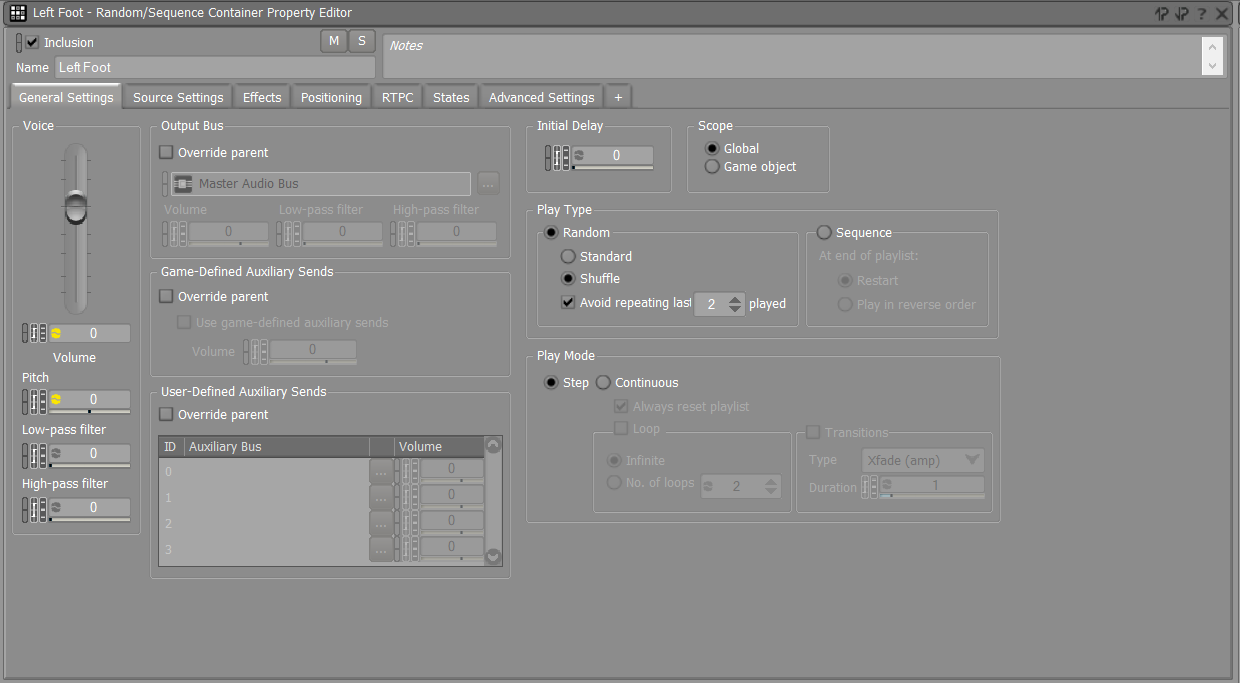
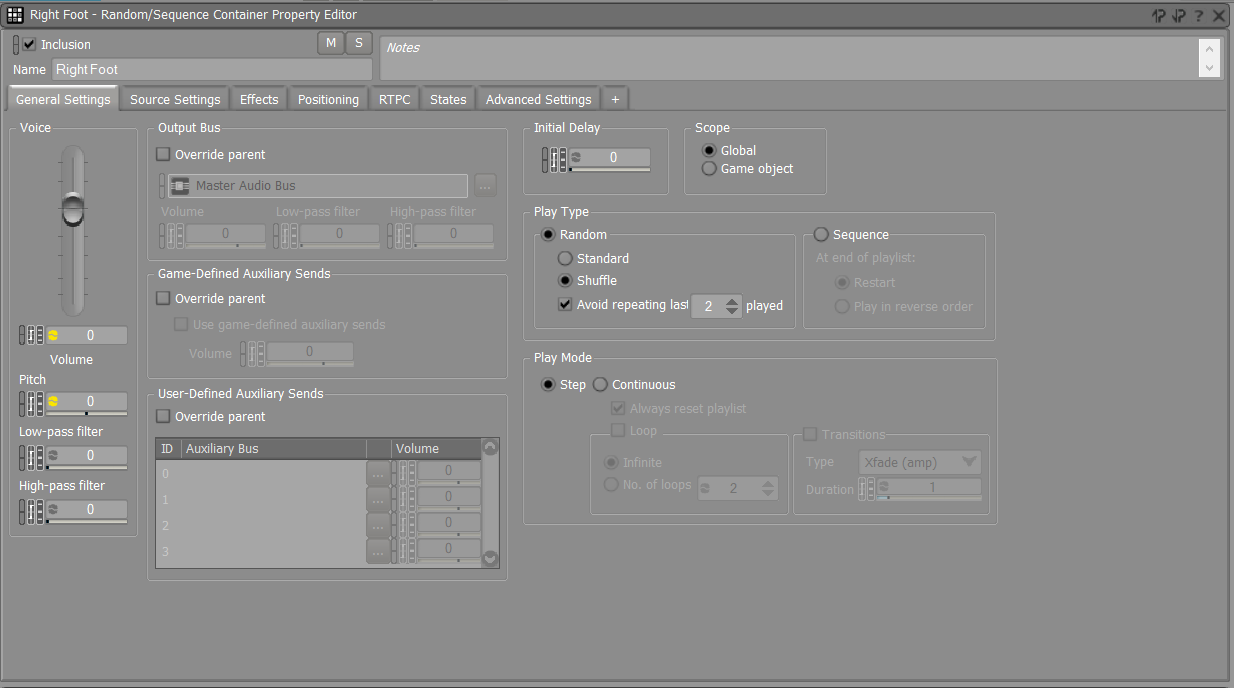
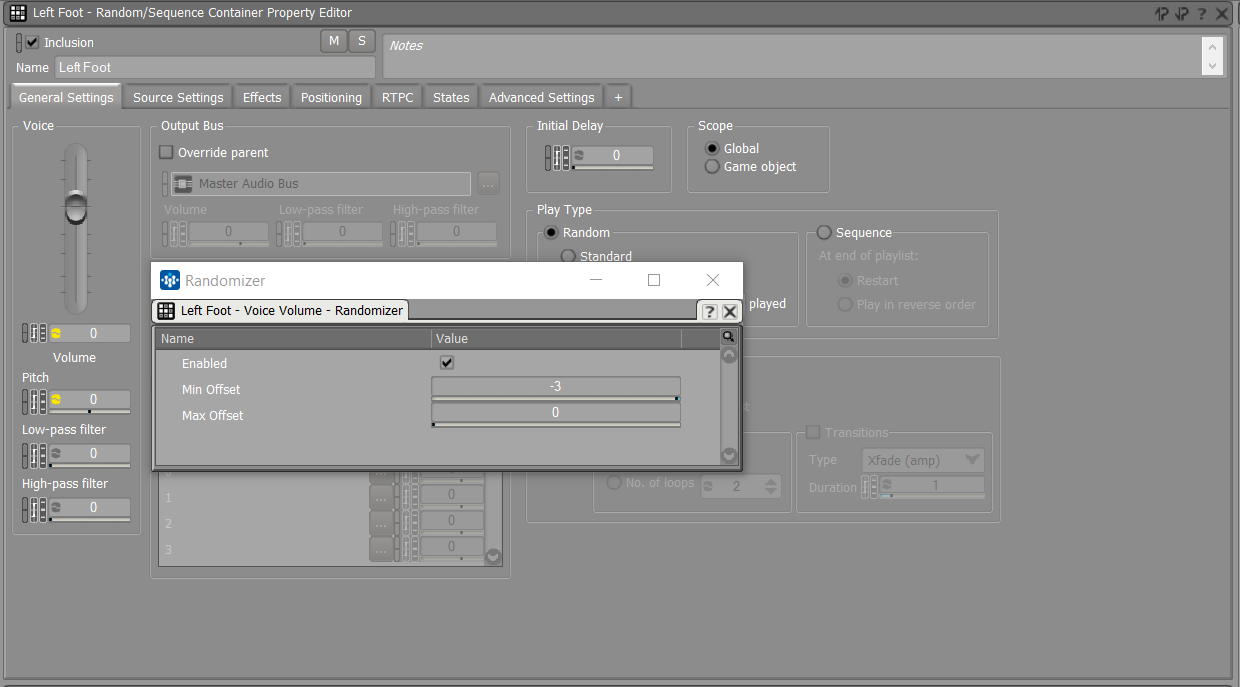
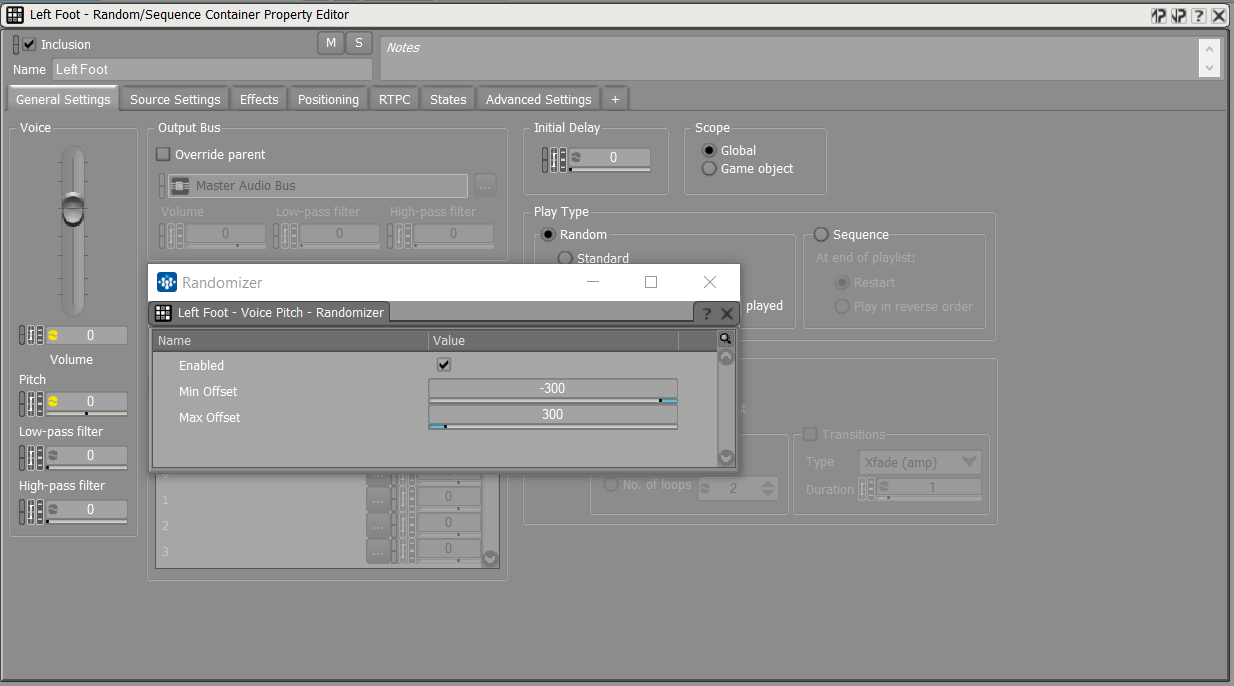
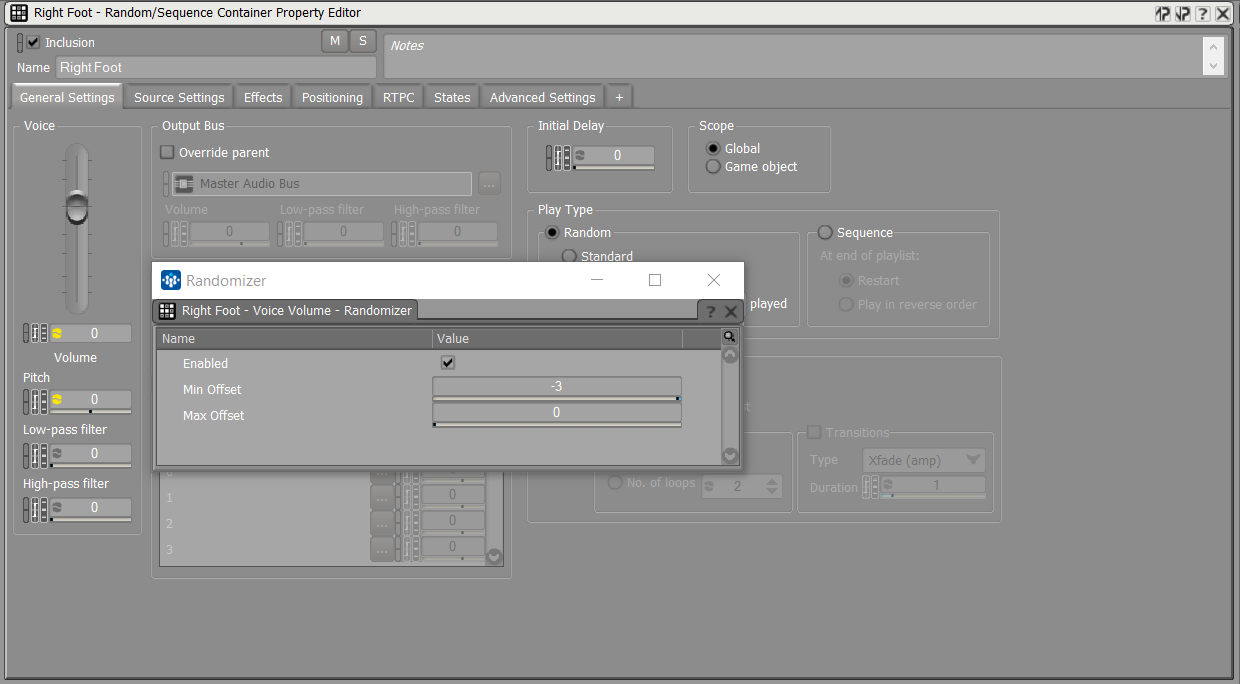
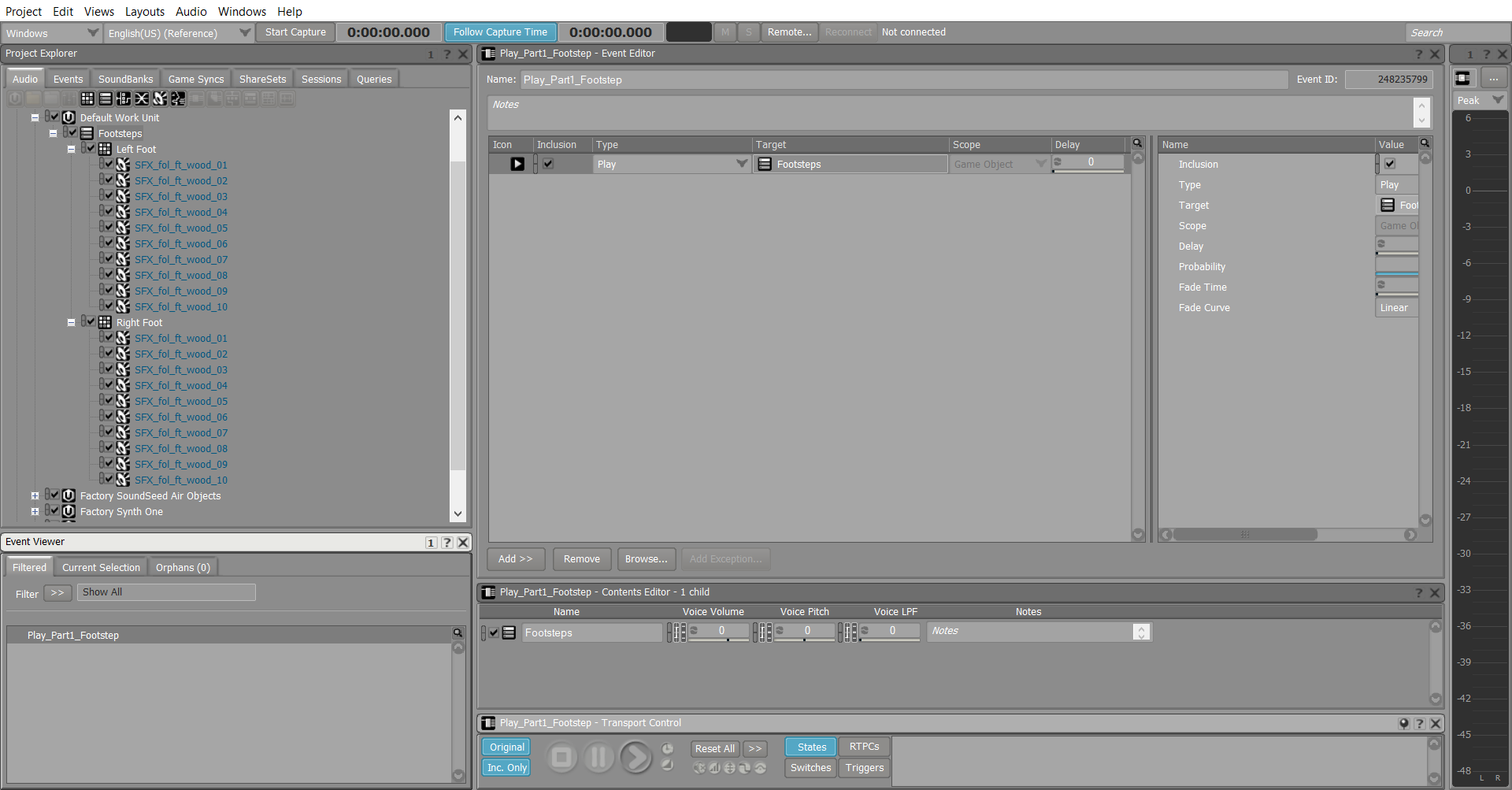
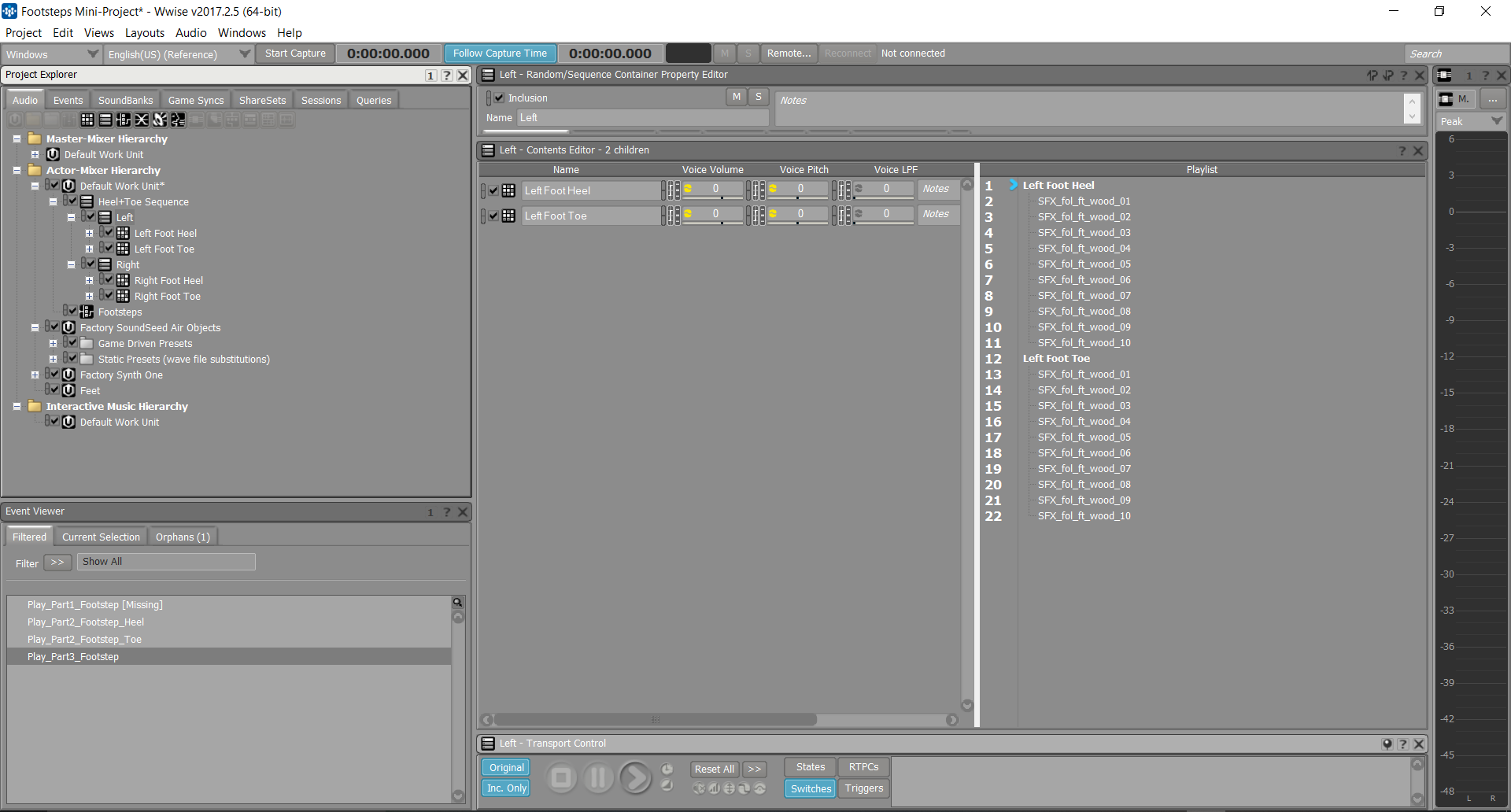
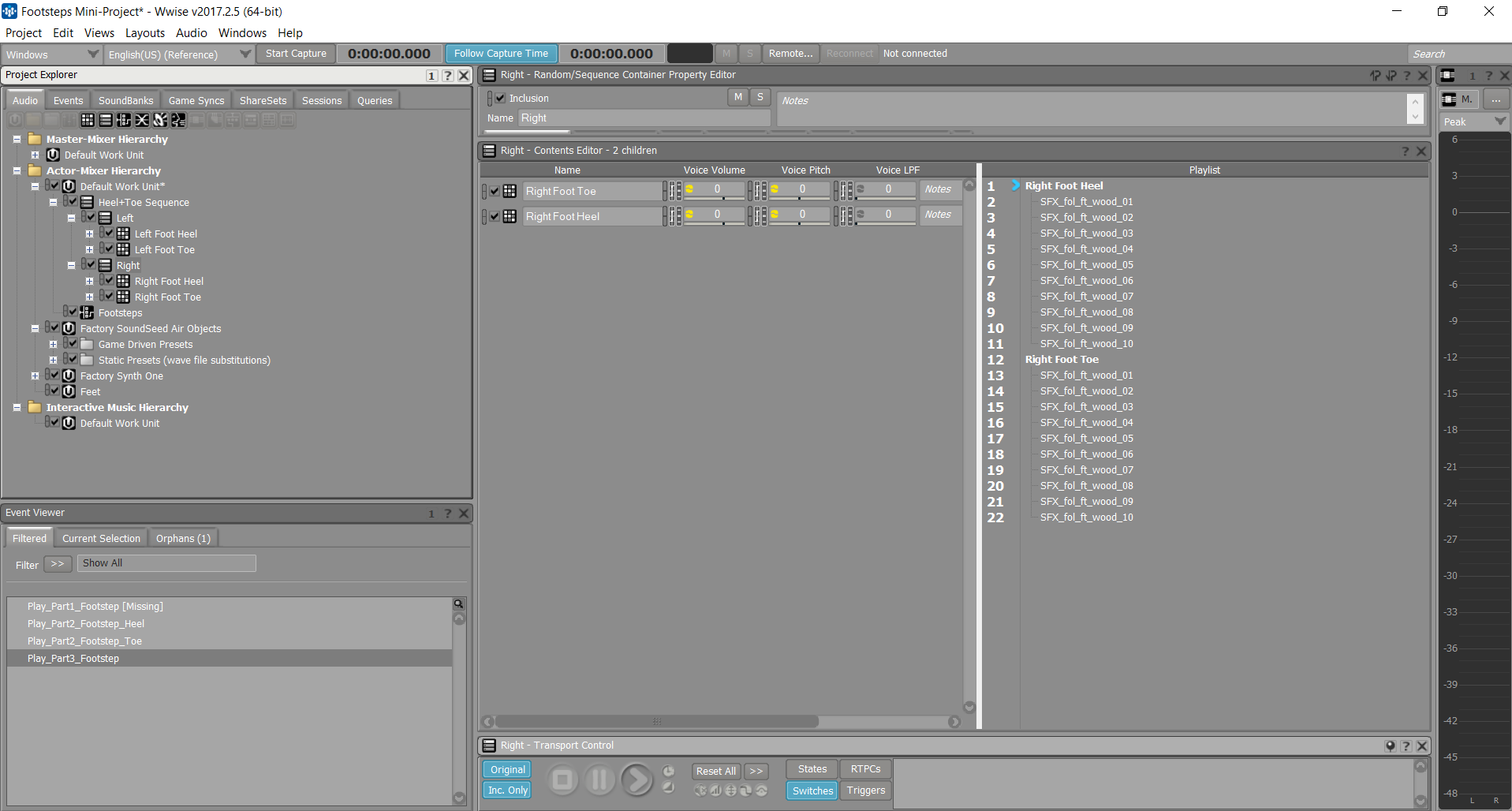
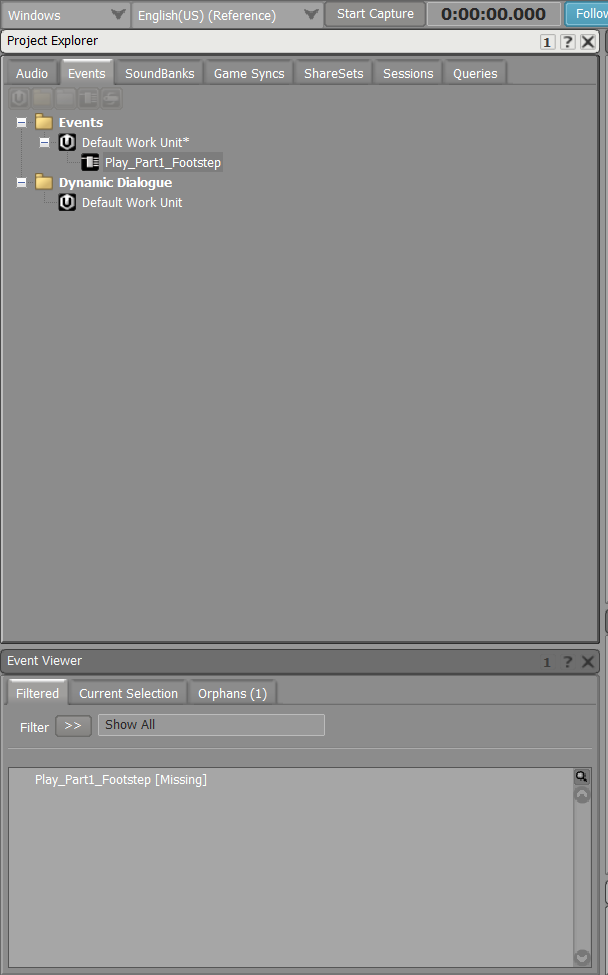
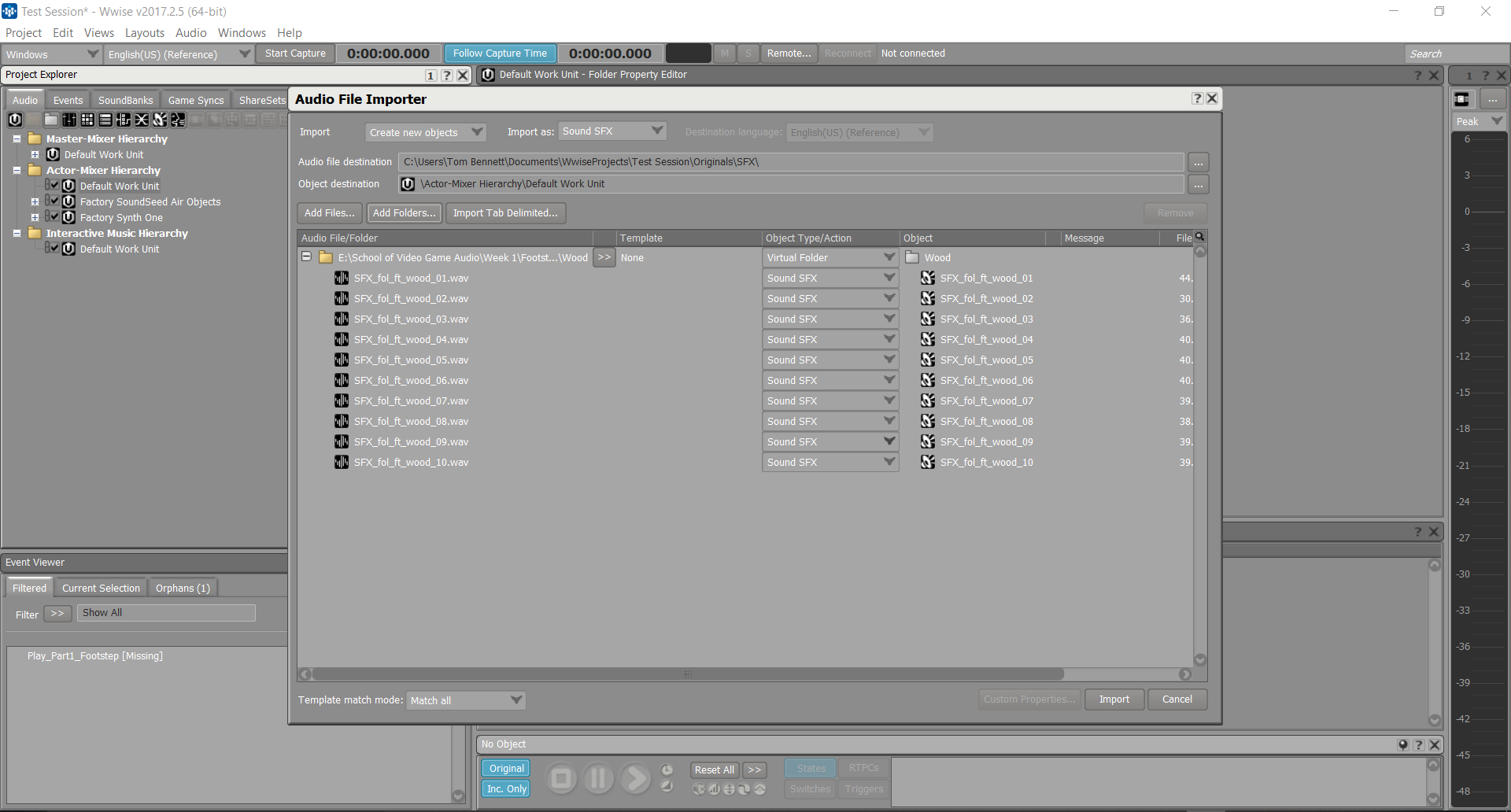
The first task involved creating a footstep play event that would alternate sounds between the left and right foot. To do this, I filled two random containers with the sounds for the left and right footsteps, set them to shuffle, and then made them both children of a parent sequence container. With this sequence container plugged into the target object slot of the play action on the Play_Part1_Footstep event, the event would then swap between the left and right foot sounds each time it was called.
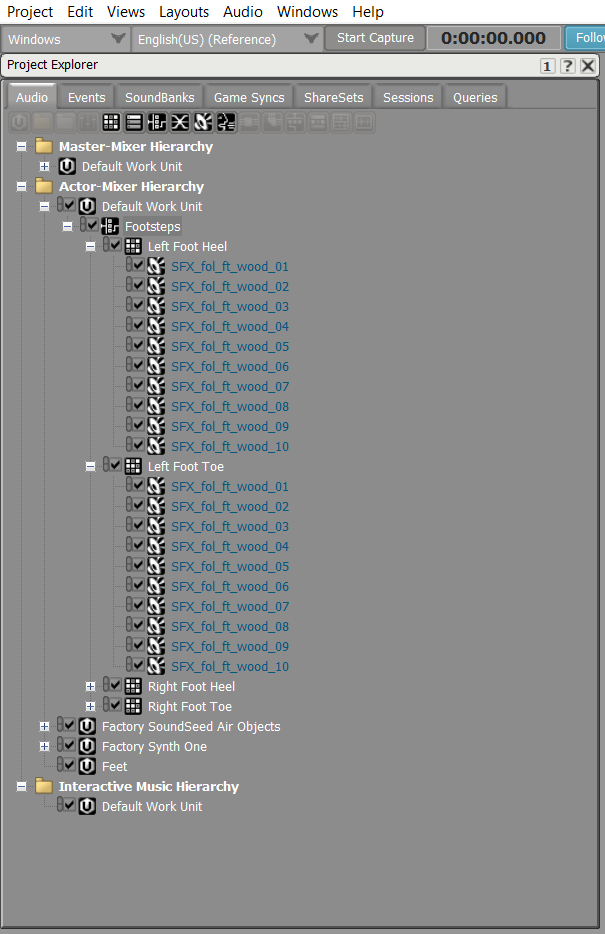
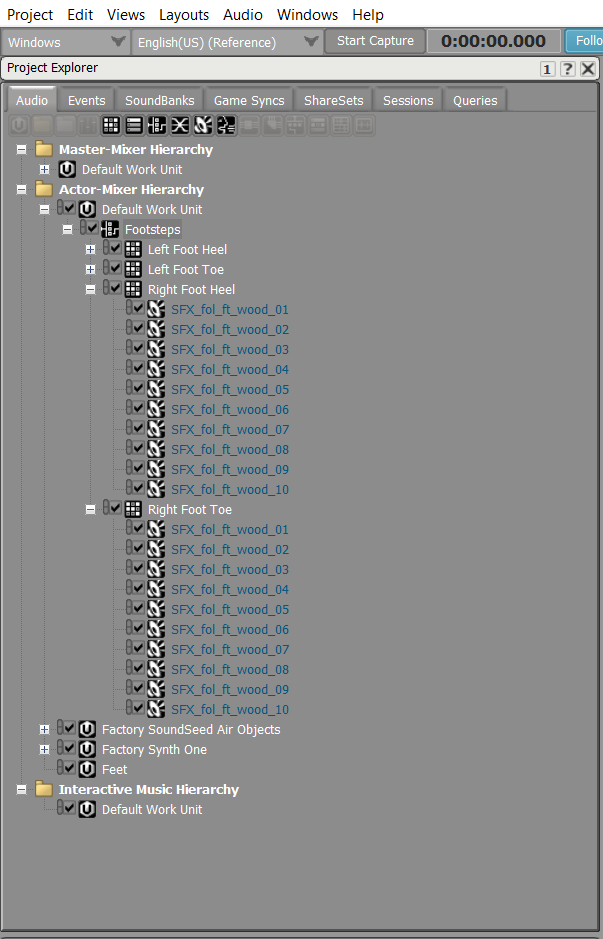
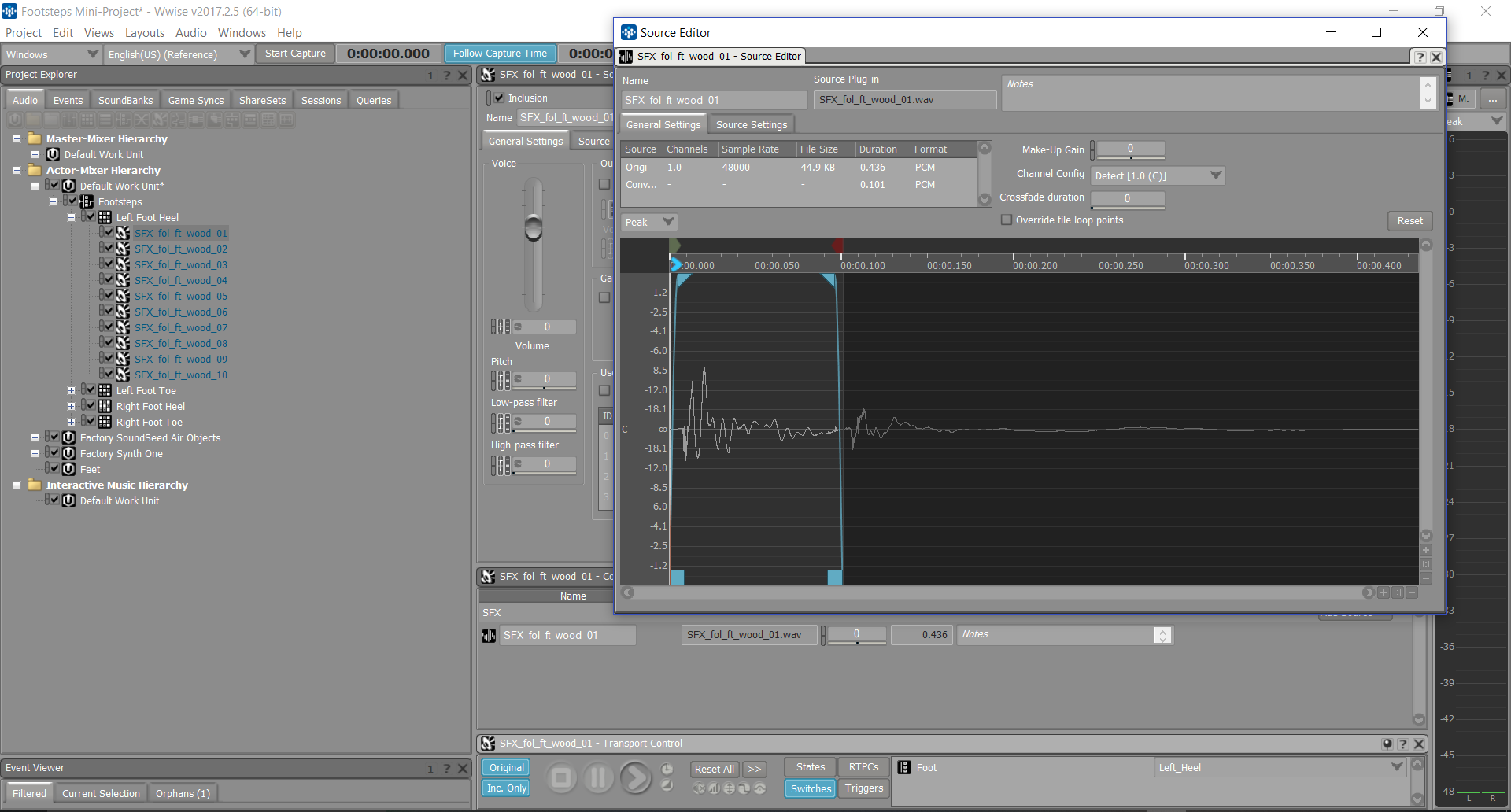
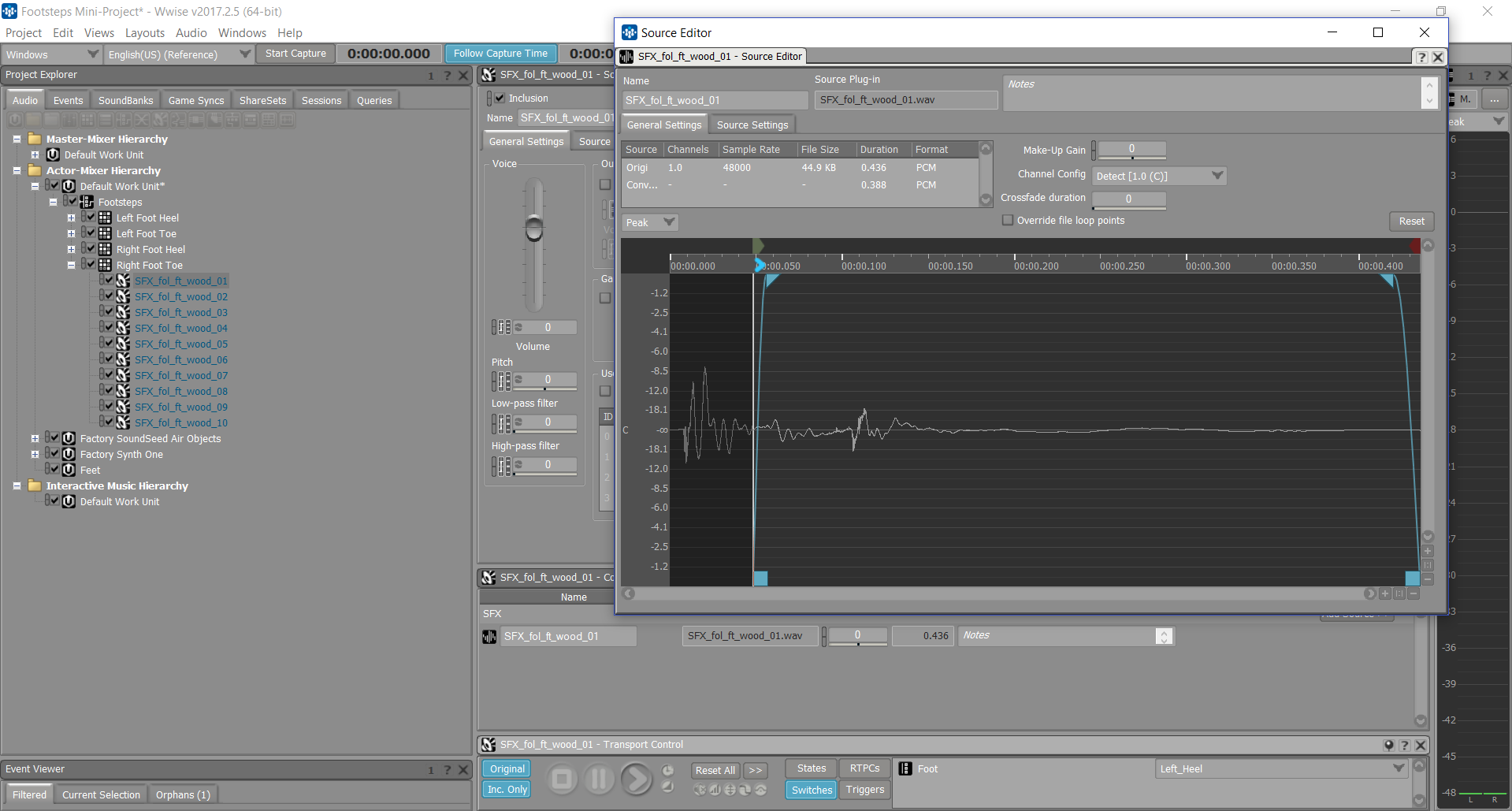
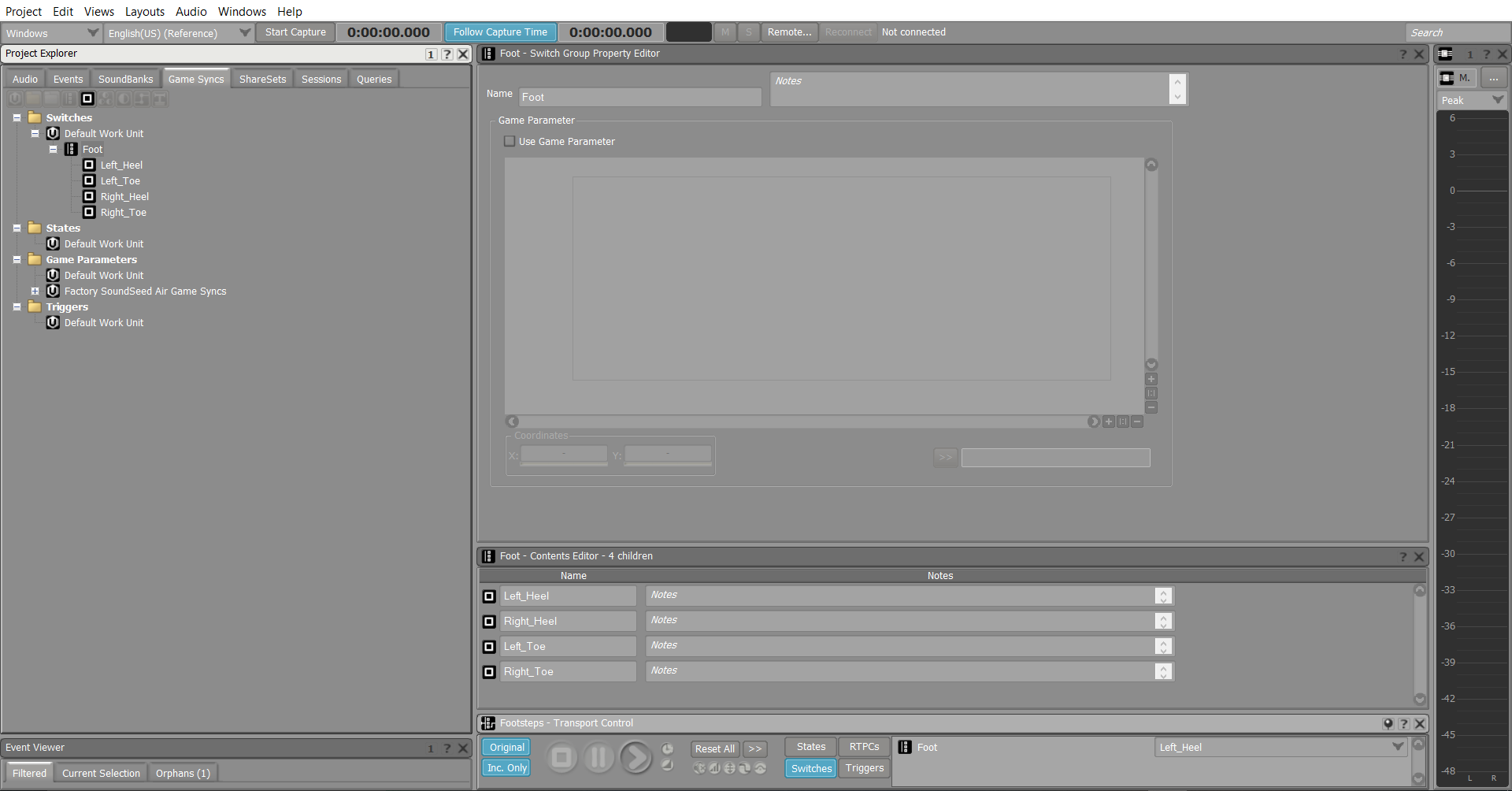
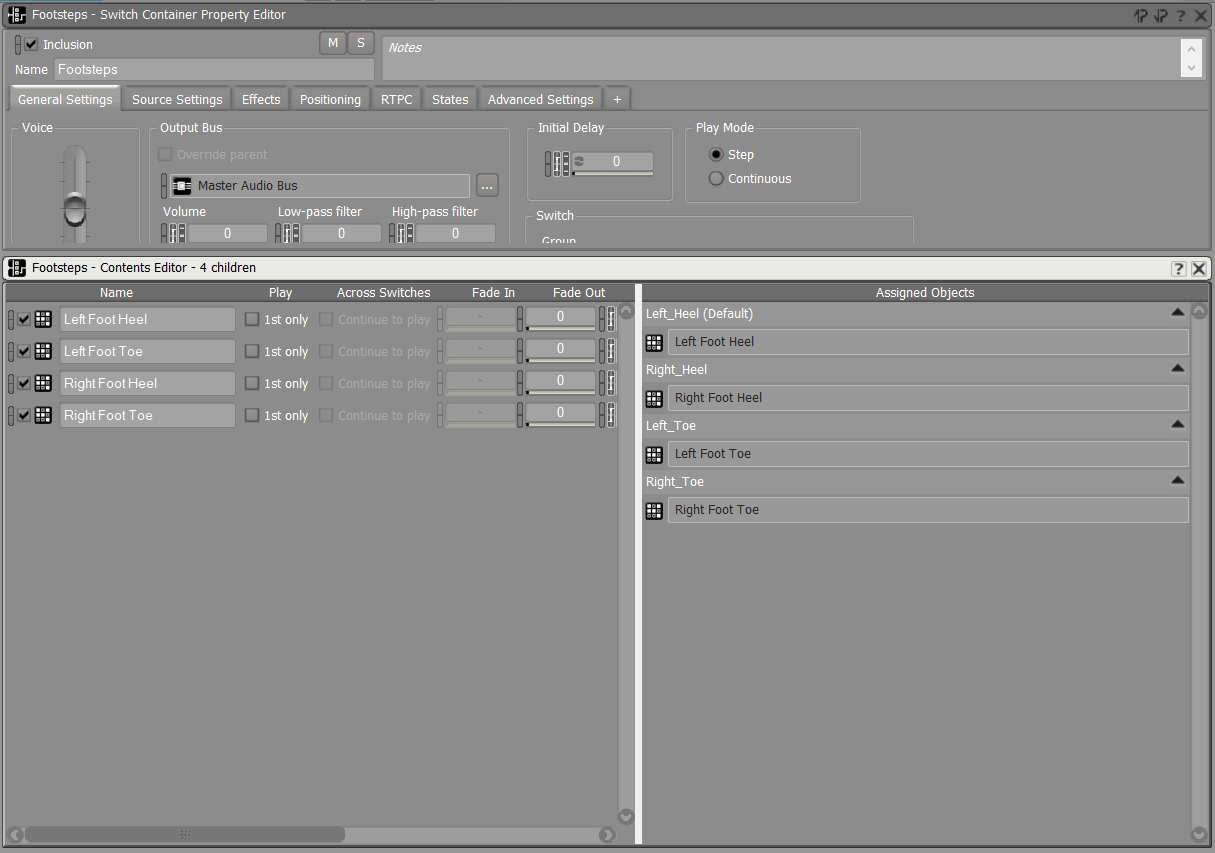
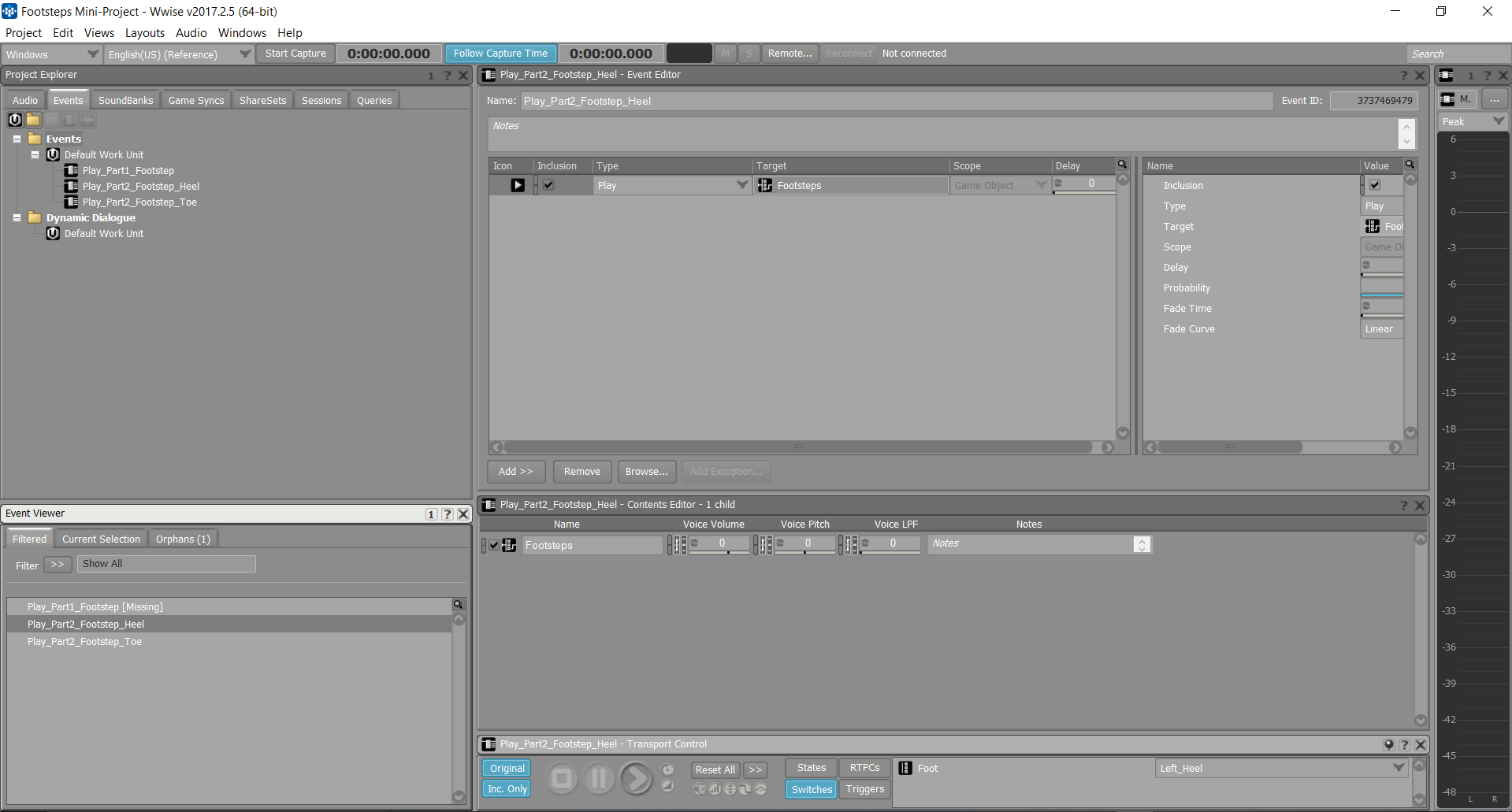
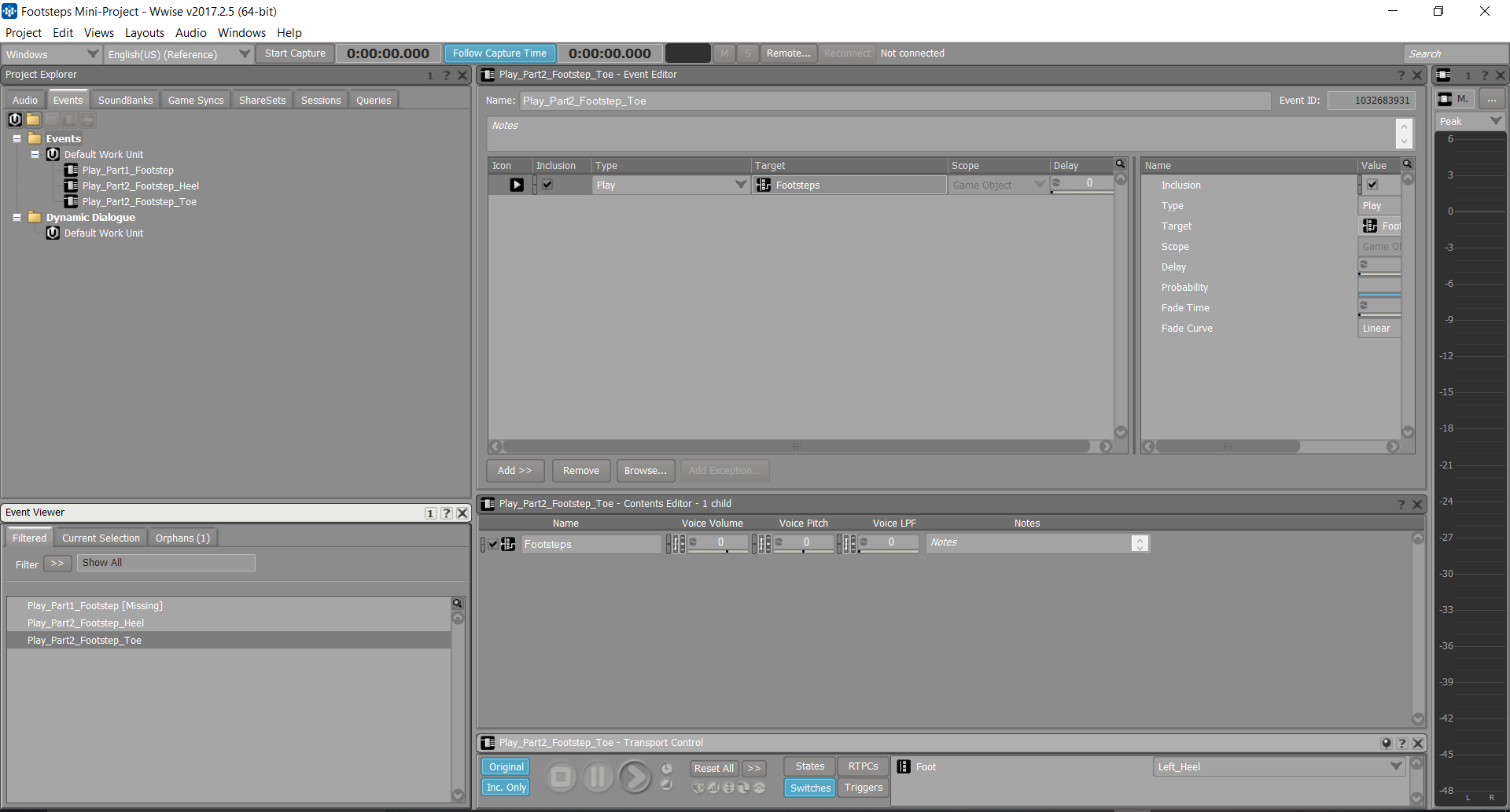
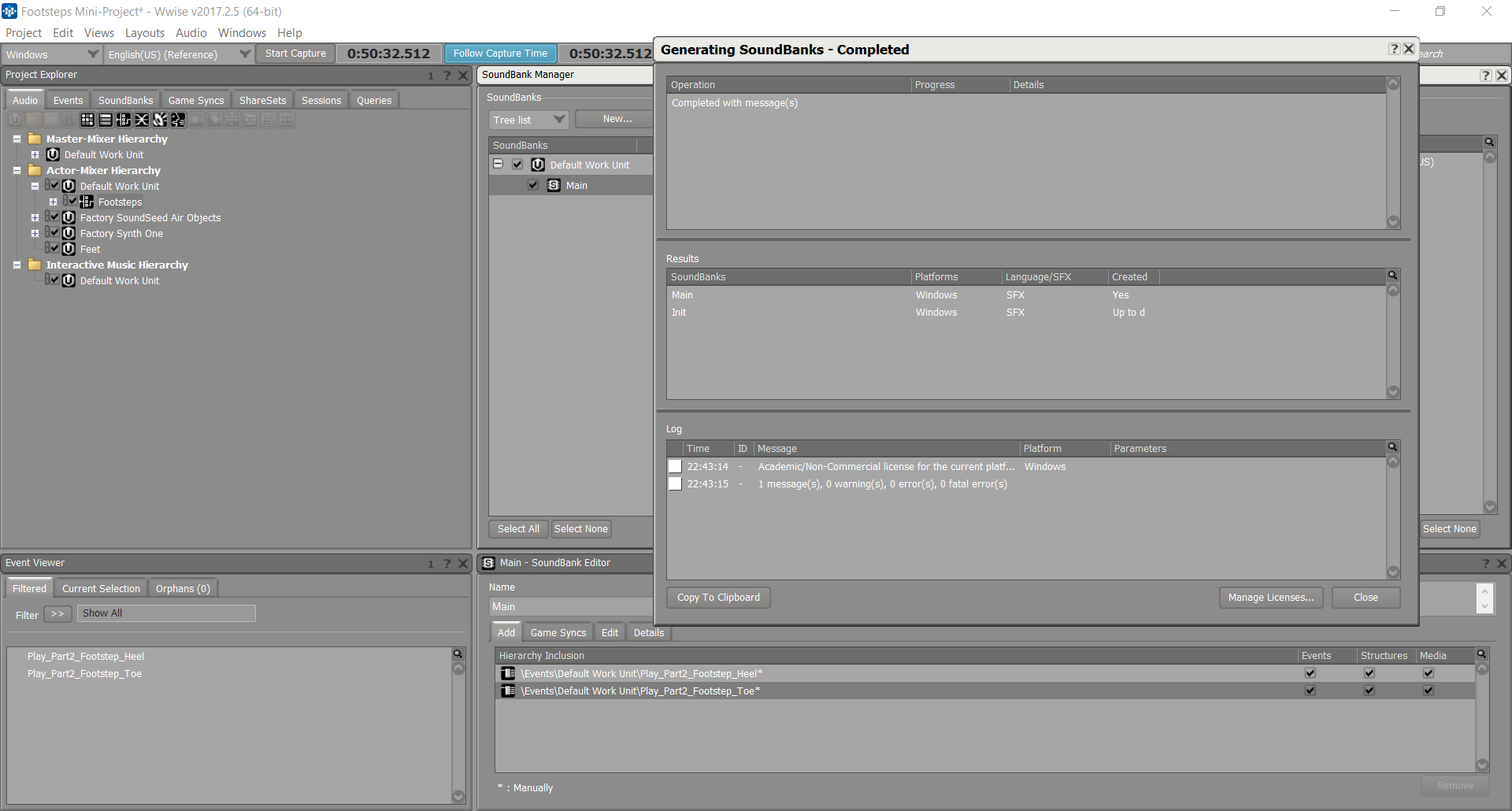
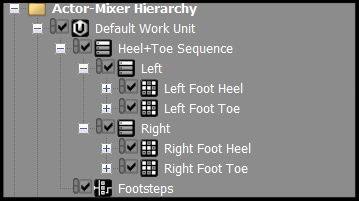
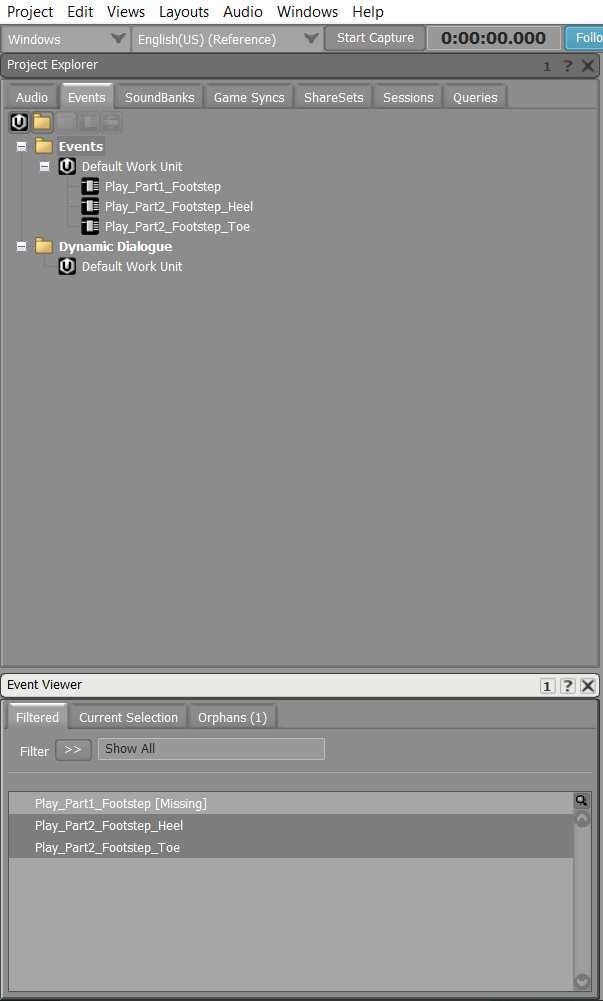
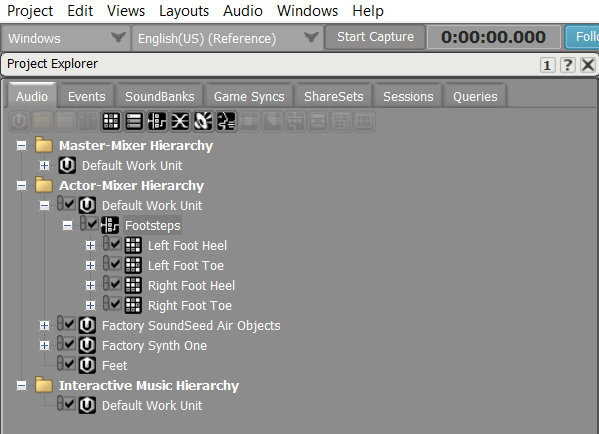
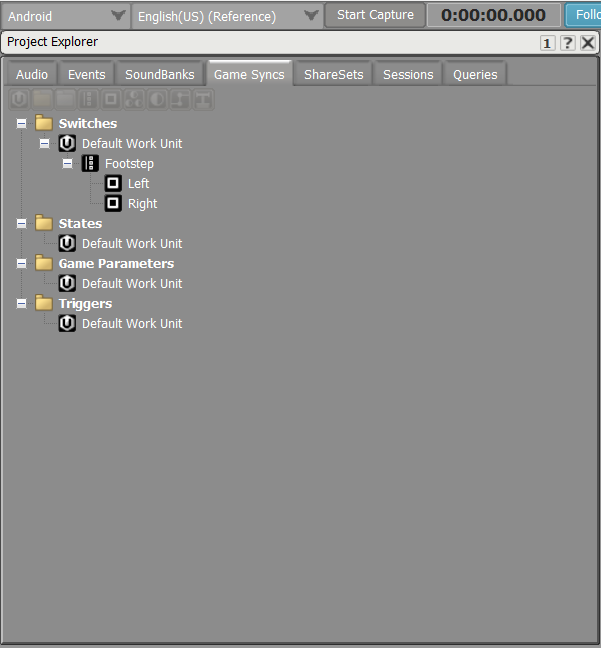
The second task involved separating each footstep sound into discrete heel and toe segments so that they could be triggered by specific key frames of a character's walk animation. This involved creating a Footsteps switch container, which contained separate heel and toe sequence containers for each foot, and four switch groups that corresponded to each of these containers. This way, as the character walks, the game can make calls for specific footstep sounds and Wwise will randomly select an appropriate sound from the appropriate container.
I later learned that a much simpler solution to this challenge was to instead use two switch containers and two switches. One switch container can be set up to contain the left and right heel random containers, while the other contains the left and right toe containers. This way, you then only need to have two switches, left and right, for the game to be able to select which set of footstep sounds should be playing, rather than having to make switches for each part of both feet.
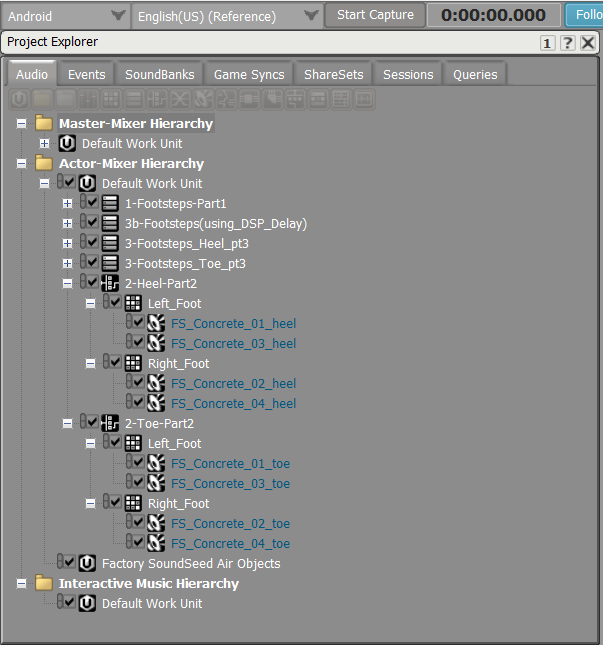
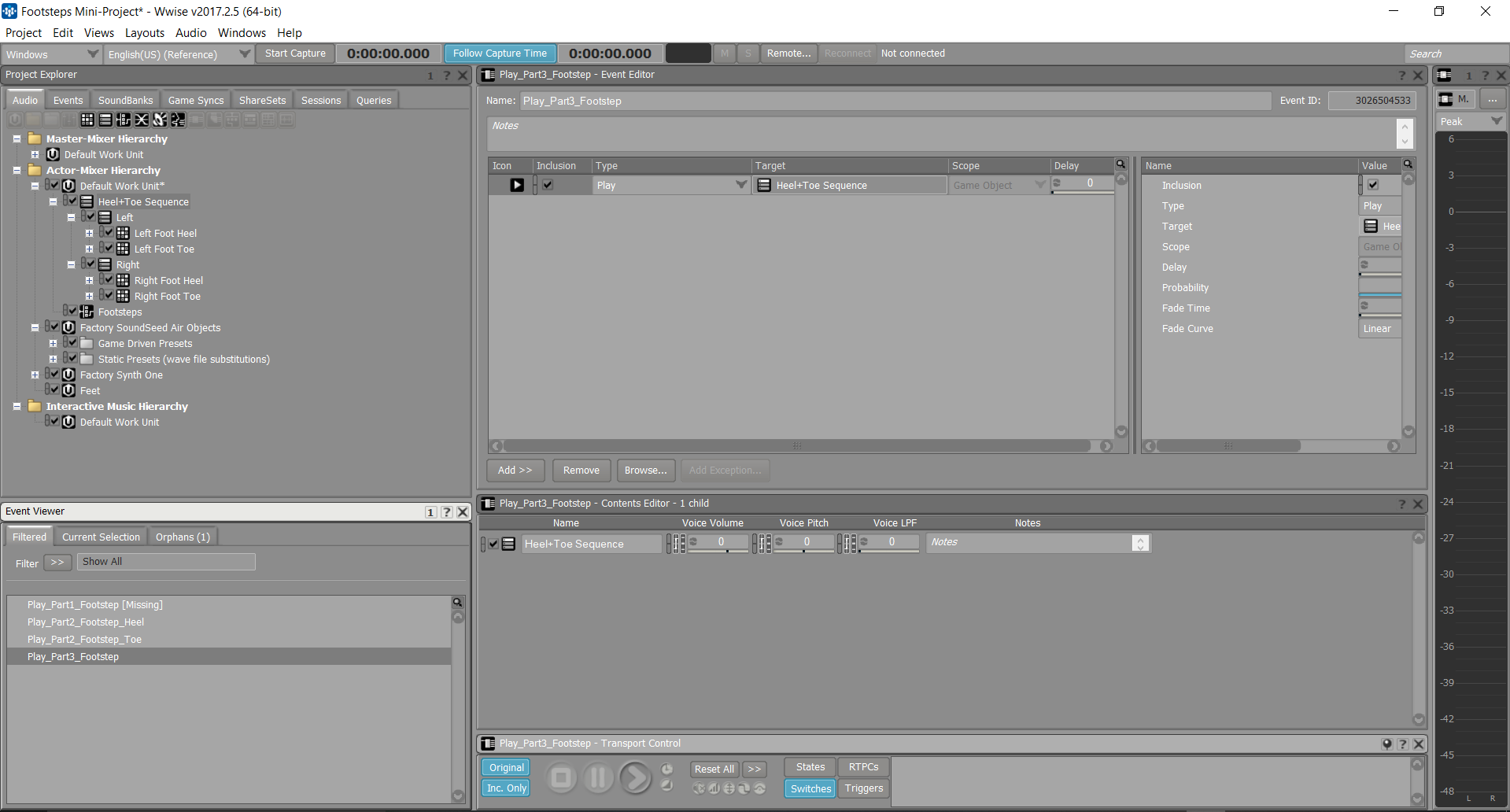
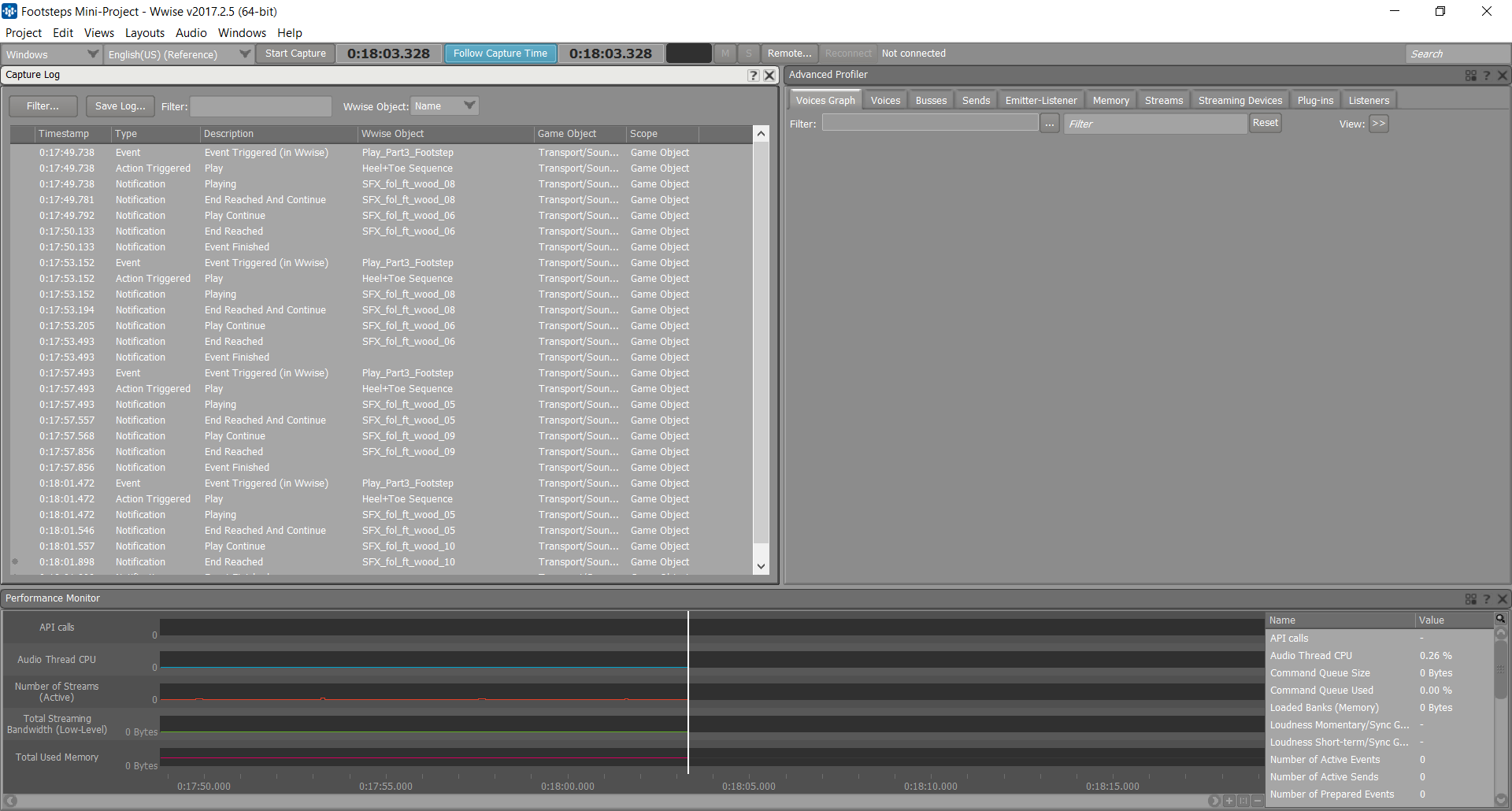
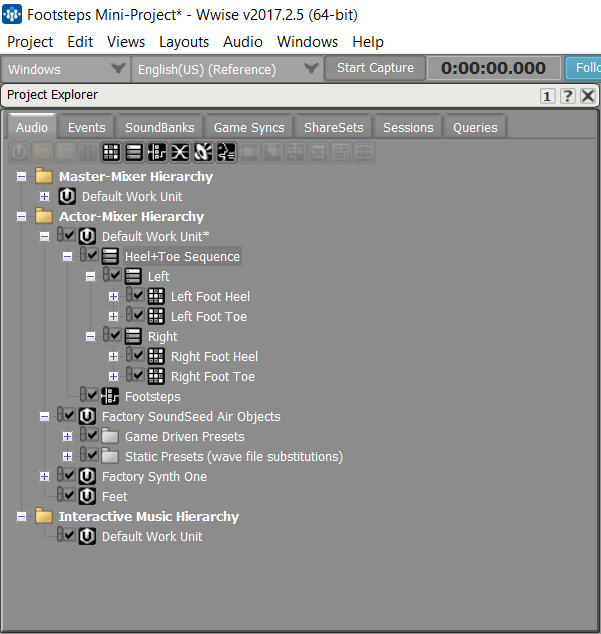
The third part of the assignment was to create a play footstep event that would alternate between left and right feet and play toe-heel sections concurrently without using a switch container. I achieved this using a series of nested sequence containers.
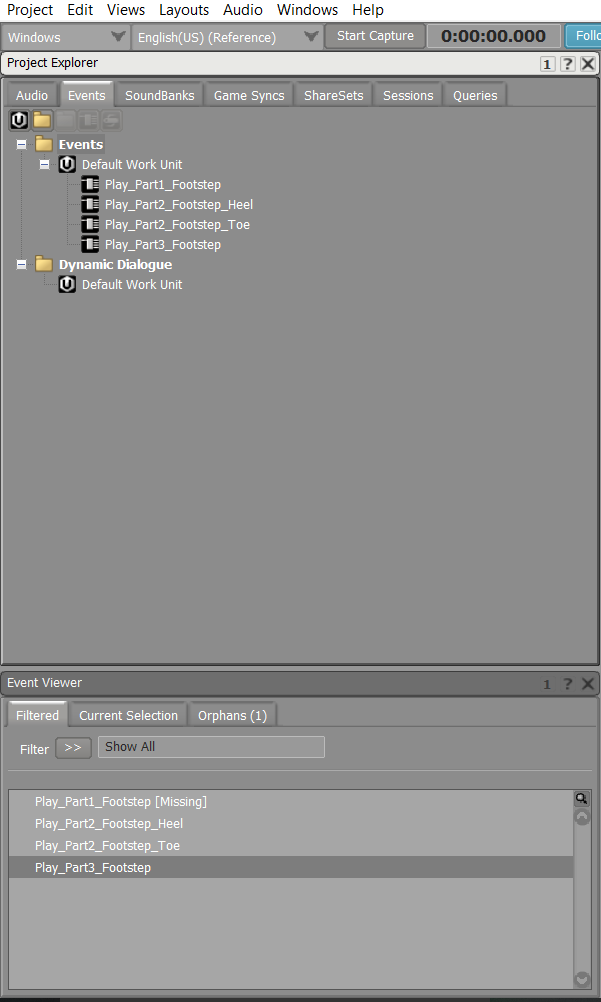
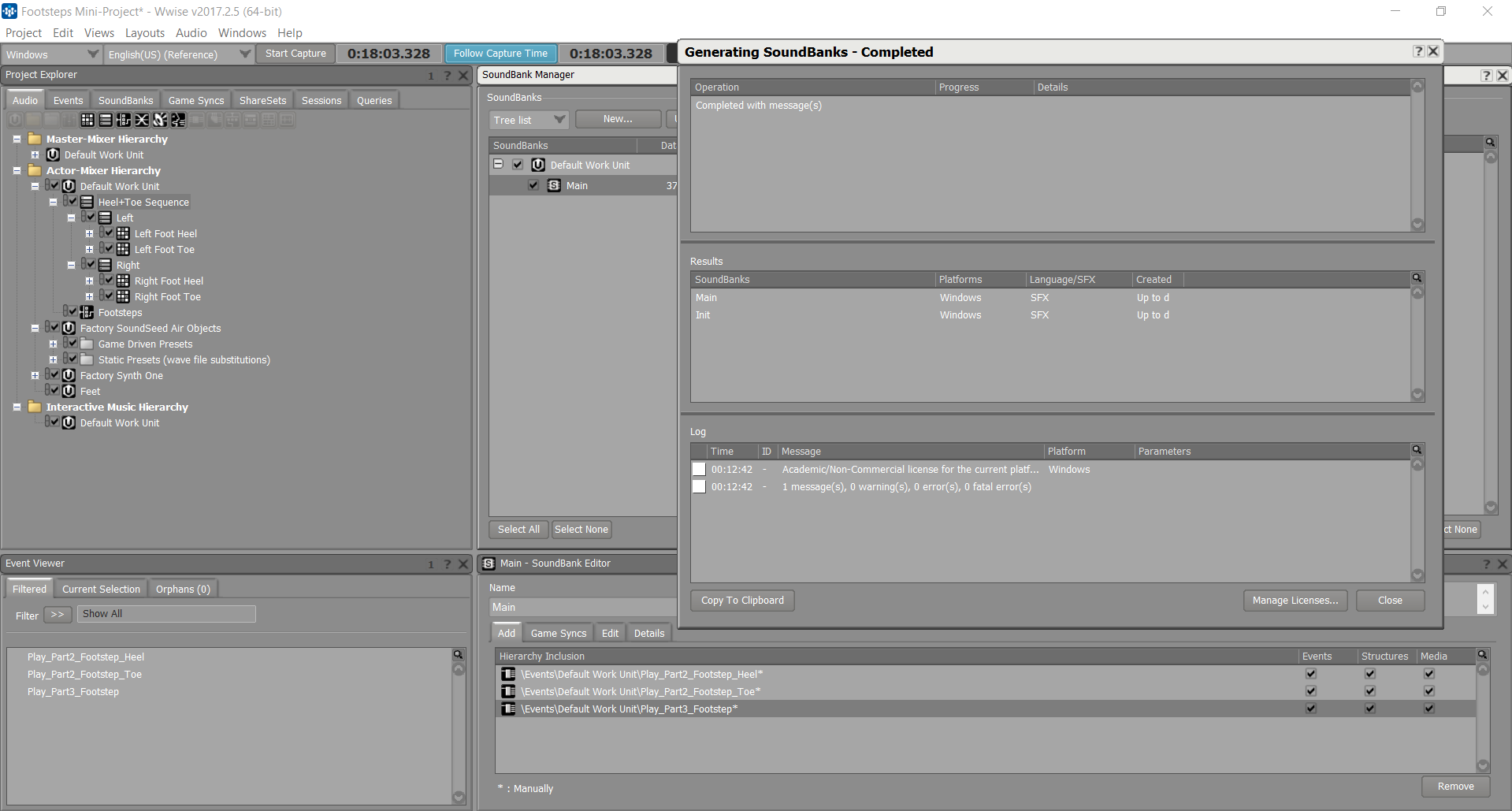
Once again I later discovered that a more elegant solution to using multiple sequence containers was to simply use multiple play actions within the Play_Part3_Footstep event.

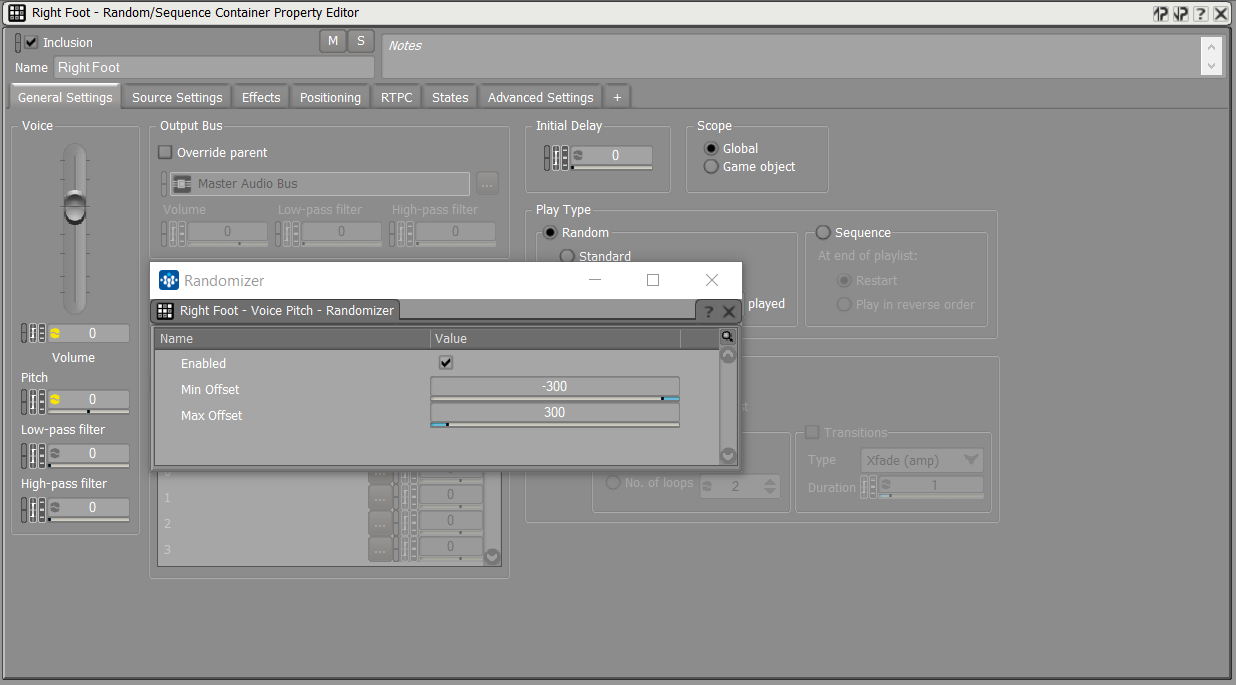
Two play actions are used here to get the heel and toe components to play back within the Play_Part3_Footstep. A slight delay has been added to the toe component so that it plays back just after the heel sound.
School of Video Game Audio - Wwise 101: AkCube Game Shotgun Sounds Implementation

Here's a quick video I made after completing the first two sections of the Wwise 101 materials. I implemented sounds for an FPS shotgun blast animation in Wouter Van Oortmerssen's AkCube game, including pump in/out and scattering shell sounds. I used delays on the SFX objects and random containers in the Fire_Shotgun_Player event so that the sounds play in sync with the shotgun firing animation.

School of Video Game Audio - Wwise Course Enrolment

I started on the Wwise course at Paul Leonard's School of Video Game Audio this week. I'm looking forward to finally getting to grips with this important piece of middleware! I'll post updates on my assignments here as I work my way through the course.

New Recorder - Zoom H2n

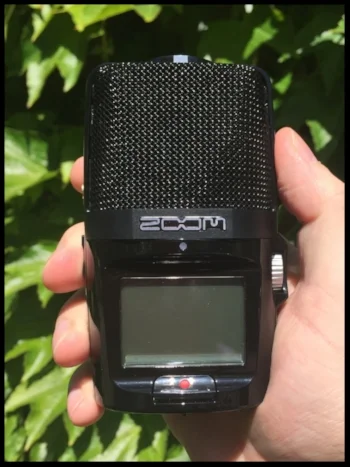
The Zoom H2n recorder. Small but powerful!

The Zoom H2n recorder. Small but powerful!

I picked up a new field recorder, the nifty little Zoom H2n!

I've been getting more into stealth field recording after reading Paul Virostek's Field Recording: From Research to Wrap book, and I wanted to get a recording setup better suited to capturing sounds surreptitiously. After hearing lots of good things about the H2n and seeing several sound designers I follow use the device, I decided to take the plunge and grab one myself.

As it's quite a small recorder, the H2n is really good for capturing sounds in public spaces without people noticing that you're recording them! So far, I've been having a lot of fun recording train ambiences. The recording below is from inside a train carriage where I was able to capture some nice and quiet train walla from people indistinctly chatting. I used the H2n's onboard mics in the X/Y configuration:

Train Interior Ambience Quiet Passenger Walla

This next recording is from a pair of Roland CS-10EMs plugged into the H2n, where I captured the sound of the train pulling into Dewsbury station. Really like how this one turned out, as you can really get the impression of the train going past your ears from left to right!

Dewsbury Station Train Pass-By Platform Right To Left

While it lacks some of the basic features, such as XLR inputs found on my other recorder, the Zoom H4n, the cool thing about the H2n is that it has a lot more mics built into it as preset configurations. The four main recording modes are Mid-side, X/Y, 2-channel surround and 4-channel surround, and each of these can be tweaked further for greater/lesser stereo width. This means that it's a really useful recorder to grab spontaneous recordings with when I'm out and about, without having to lug around a bunch of extra stands, cables and mics with me on the off-chance I find something interesting to record.

The slight drawback I've encountered with the unit so far is that the surround sound recording capabilities are not as good as I was hoping for. The H2n can record to a max sample rate of 96kHz and to 24-bit depth for the mid-side, X/Y and 2-channel blended surround modes, but if you want to make a discrete 4-channel surround recording, the device can only record to 48kHz/24-bit. Though 48kHz is the post-production standard sample rate, it would have been nice to be able to record at max quality to make it easier to pitch-shift your recordings without introducing a load of unwanted artefacts into your sounds.

Still, I'm having a lot of fun using the H2n as my go-to stealth recorder. Time to slink back into the shadows and find more things to record!

May 2018 Sound Design Showreel

Made my first sound design reel! Picked a few sections from the various projects I worked on during the past year of my studies that show my implementation and sound design skills. It's rough and needs a lot of work, but hey for my first reel I'm actually quite pleased with how it turned out.